

Apollo.io is the default B2B prospecting platform for a reason—275 million contacts, 73 million companies, and filters for nearly everything. But you’ve hit its limits.
You want companies whose job postings mention a competitor’s product. Prospects who reviewed a rival on G2. Organizations whose website copy signals strategic priorities you can address. Apollo can’t filter for any of that.
This guide covers five use cases where Bright Data’s web infrastructure fills the gaps Apollo leaves behind—no code, just the logic, the features, and the business value.
Use Case 1: Job Posting Intent Signals with Decision-Maker Mapping

While Apollo can track general job postings, it may not allow you to filter for highly specific internal roles or requirements mentioned deep within the text of a posting. For example, a sales team might want to target companies specifically hiring for an “HR reporting automation specialist” rather than a general HR manager. Another sales team selling an observability platform might want to find companies whose job postings specifically mention “Datadog” or “Splunk” as required experience—a clear signal they’re using competitors. Apollo.io does not natively support identifying account using such intricate criteria.
The Bright Data Solution
Bright Data’s Web Scraper API includes pre-built endpoints for LinkedIn Jobs, Indeed, Glassdoor, and Greenhouse. These APIs return structured data, including the full job description text, required skills, and company identifiers. You can extract job postings that mention specific technologies, competitor products, or strategic initiatives.
Once you have a list of companies with matching job postings, Apollo’s Company Search lets you import that list and surface contacts by title, seniority, and department. Combine the hiring signal (from Bright Data) with decision-maker identification (from Apollo) to build hyper-relevant outreach lists.
Use Case 2: Real-Time Tech Stack Detection for Competitive Displacement
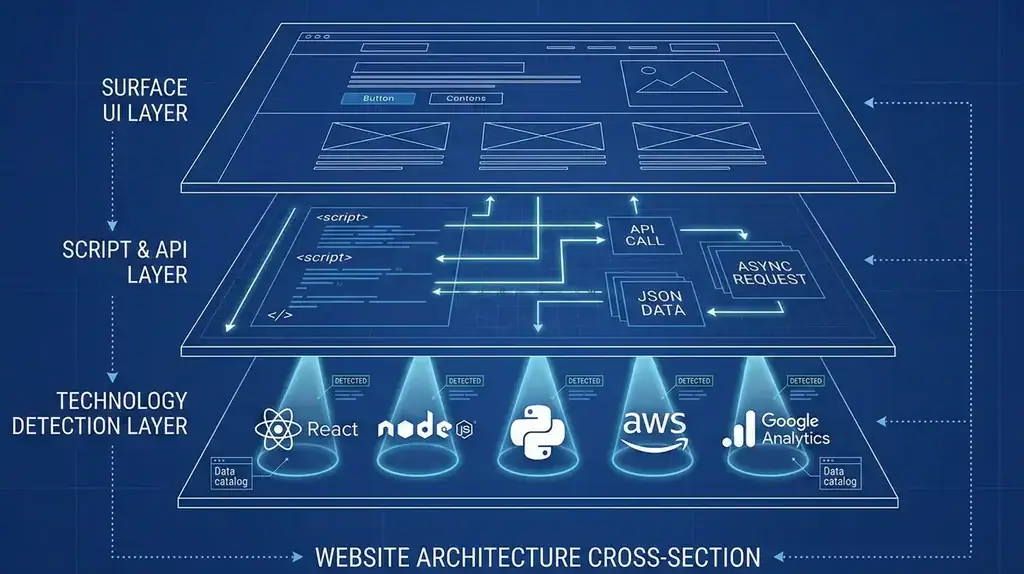
Knowing what technology a prospect currently uses is gold for competitive positioning. If a company runs on a competitor’s platform, your outreach can address specific pain points and migration paths. But technology data goes stale quickly—companies switch vendors, add new tools, and deprecate old ones constantly.
Apollo provides a Technologies filter powered by third-party data sources that tracks which software companies use. This covers a wide range of technologies and is genuinely useful for broad targeting. However, the data has known freshness issues. Apollo’s technographics are updated periodically, not in real time, meaning the information may be weeks or months old. For fast-moving categories—marketing automation, analytics tools, security platforms—this lag can mean targeting companies that have already churned from a competitor or missing companies that just adopted one.
Additionally, Apollo’s technology detection is limited to its predefined list. If you’re looking for a niche tool, a new market entrant, or a custom internal system referenced on a company’s website, Apollo won’t surface it.
The Bright Data Solution
Bright Data’s Scraping Browser and Web Unlocker API allow you to crawl prospect websites directly and detect technologies through multiple signals: script tags in the page source, network requests to third-party services, meta tags, and even references in page content. This is essentially building your own BuiltWith or Wappalyzer-style detection, but with complete control over what you’re looking for and guaranteed freshness.
The Scraping Browser is particularly powerful here because it fully renders JavaScript, capturing technologies that only load dynamically. With Bright Data’s 150+ million residential IPs across 195 countries, you can crawl at scale without triggering anti-bot protections.
After enriching your target list with fresh tech stack data, use Apollo’s filters to layer on firmographic and contact criteria. Find the VP of Engineering at companies currently running your competitor’s JavaScript SDK, identified within the last 48 hours.
Use Case 3: Review Platform Mining for Verified Competitor Users

Review platforms like G2, Capterra, and TrustRadius are essential for competitive intelligence because they confirm product usage and surface specific customer pain points. While it is often assumed these signals are invisible within Apollo.io, the platform actually captures this intent through its partnership with LeadSift. LeadSift specifically crawls review sites, public forums, and social networks to identify companies that are researching keywords or competitors.
These behavioral signals are operationalized into Buying Intent scores based on frequency and recency, allowing you to filter for prospects who are actively “surging” on topics related to your competition. However, a limitation does exist: Apollo aggregates this data into 1,600+ intent topics rather than providing a raw text filter for “contacts who wrote a negative review”. Therefore, while the intent to purchase or switch is visible and actionable within Apollo, you may still need supplemental research tools to extract the specific “likes and dislikes” mentioned in review text for hyper-personalized messaging.
The Bright Data Solution
Bright Data’s Web Scraper API provides dedicated endpoints for G2 and other review platforms. These return structured data, including the reviewer’s company name (when disclosed), their role, star ratings, and the full review text. You can filter for reviews with specific sentiment (e.g., mentions of “slow,” “expensive,” “missing features”) to identify users who are actively frustrated with a competitor.
The Dataset Marketplace also offers pre-collected datasets from review platforms, which can be more cost-effective if you need historical data rather than real-time collection. These datasets include company identifiers that can be matched against Apollo records.These behavioral signals are operationalized into Buying Intent scores based on frequency and recency, allowing you to filter for prospects who are actively “surging” on topics related to your competition. However, a limitation does exist: Apollo aggregates this data into 1,600+ intent topics rather than providing a raw text filter for “contacts who wrote a negative review”. Therefore, while the intent to purchase or switch is visible and actionable within Apollo, you may still need supplemental research tools to extract the specific “likes and dislikes” mentioned in review text for hyper-personalized messaging.
Use Case 4: News-Based Trigger Events for Timely Outreach

Imagine you sell a specialized HR automation tool. You want to find companies that aren’t just “hiring” (which Apollo can show you), but are specifically hiring for a “HR reporting automation specialist” because their CEO just announced a pivot toward data-driven culture on an earnings call.
Where Apollo reaches its limit:
Apollo can filter for “Companies with 500+ employees” and “Hiring in HR”. Or it can show you if a company is “Surging” on the topic of “Digital Transformation” because of its LeadSift integration. However, you still have to manually click into every company to see why they are surging or what the CEO actually said. You can’t hit a button that says “Filter for companies whose CEO specifically mentioned ‘automation’ in a press release today”.
How Bright Data solves this (The “Deep Lookup”):
- Search the Web like a Database: You can use Bright Data’s “Deep Lookup” to run a query like: “Find all B2B software companies with 500-3,000 employees that have posted a role for an ‘HR reporting automation specialist’ in the last 90 days”.
- Extract Raw News Metadata: Using the News Scraper, you can pull raw headlines, summaries, and stock tickers from sites like Yahoo Finance or the BBC.
- Find Hidden Evidence: Bright Data can crawl a company’s own website to find specific “Product-Led Growth” signals, such as whether they offer a “self-service free trial of at least 14 days”—a detail that is not a standard filter in any B2B database.
Why this matters for your Outreach
If you use only Apollo, your email says: “I see you’re interested in HR tech.” (Generic). If you use Bright Data, your email says: “I saw your CEO’s statement on Yahoo Finance about moving to a data-driven culture, and I noticed you’re specifically hiring an HR Reporting Automation Specialist. We help specialists in that exact role…” (Hyper-personalized).
Use Case 5: Contact Validation Through Live Website Verification
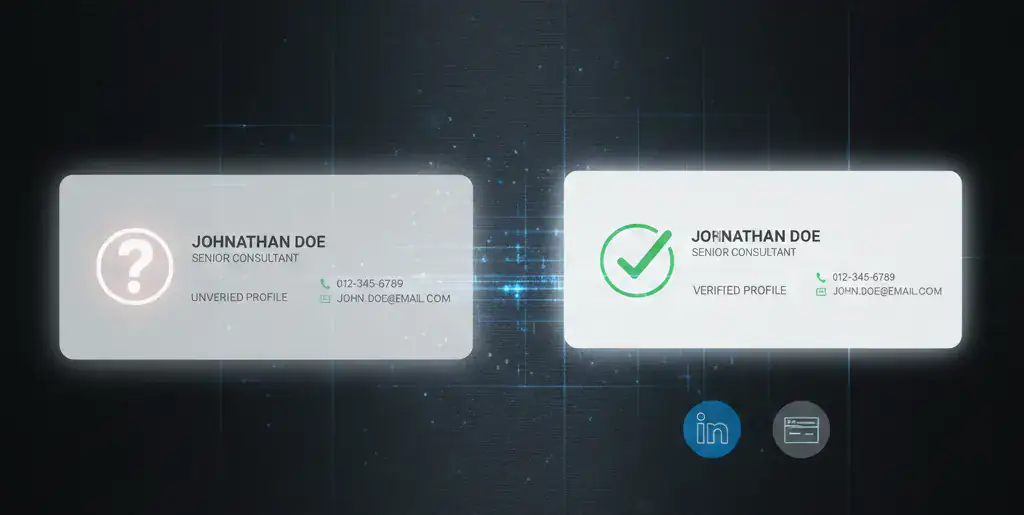
Contact data decays fast. People change jobs, get promoted, or leave companies without updating their LinkedIn profiles. Email addresses go stale. Sending outreach to outdated contacts wastes time, hurts deliverability, and damages your domain reputation. The cost of bad data compounds quickly at scale.
Why Apollo Alone Falls Short
Apollo provides email verification and tracks Job Changes for contacts in its database. These features help, but they’re reactive rather than proactive. Apollo can tell you an email bounced or that someone updated their LinkedIn to show a new role, but it can’t verify whether a contact still works at a company before you reach out. The platform relies on its own data sources, which may lag behind reality.
Additionally, Apollo’s verification is limited to email deliverability. It doesn’t cross-reference against live company data to confirm employment status.
The Bright Data Solution
Bright Data’s LinkedIn Profiles API provides fresh data directly from LinkedIn, including current employment status, title, and company. You can verify Apollo contacts against their live LinkedIn profiles before outreach.
The Web Scraper API also enables crawling company “About Us” and “Team” pages to verify whether a contact’s name and title still appear. This catches cases where someone has left but hasn’t updated their LinkedIn, or where LinkedIn data itself is stale.
By validating contacts against multiple live sources before export, you can dramatically reduce bounce rates and ensure your outreach reaches real people in the roles Apollo claims they hold.
The Bottom Line
Apollo is a database. A very good one—but still a database. It can only filter on attributes someone has already collected, categorized, and structured into searchable fields. When your targeting fits those predefined boxes, Apollo is all you need.
Bright Data enters the picture when the signal you’re chasing doesn’t live in any database yet. It’s still out there on the open web—buried in a job description, sitting in a product review, mentioned in a press release, or visible in a webpage’s source code. No one has extracted it, cleaned it, and turned it into a filter you can click.
That’s the fundamental divide: Apollo queries what’s been structured. Bright Data extracts what hasn’t.
If your competitive edge depends on targeting criteria that’s too specific, too fresh, or too niche to exist in a sales intelligence platform, you’re not looking for a better database. You’re looking for a way to build your own.